
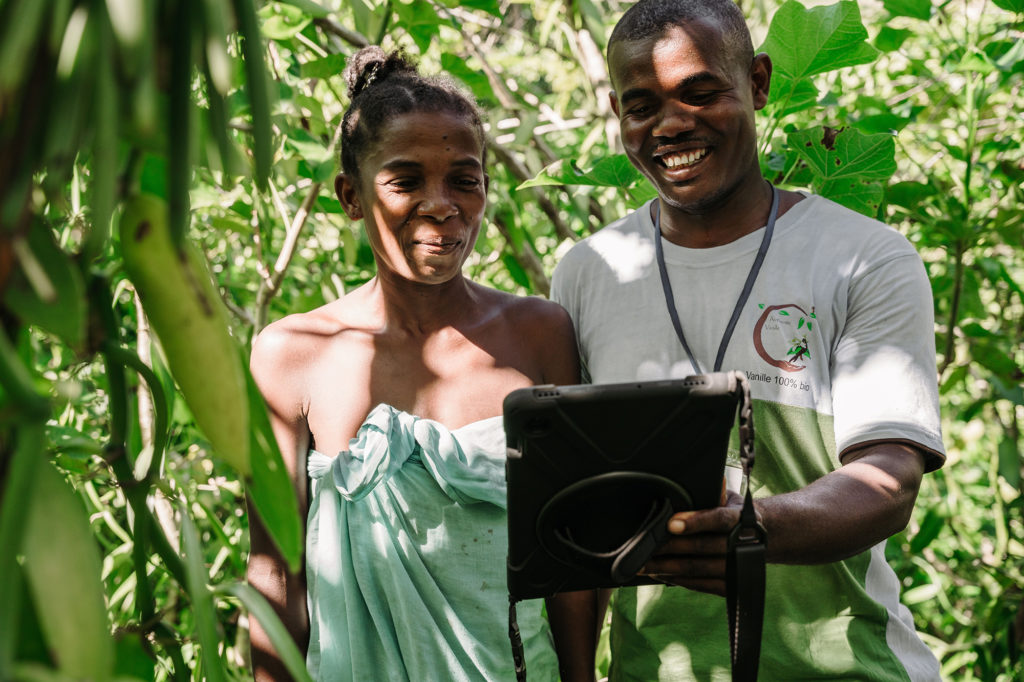
In the vanilla sector, quality is not built solely in a laboratory, warehouse or specification document.
It begins in the field, alongside producers, families, technicians, associations, cooperatives and the teams supporting every stage of the supply chain.
Talking about responsible vanilla therefore means addressing the product, traceability, quality, education, training, agricultural diversification and economic resilience together.
At Authentic Products, this approach is based on one conviction: a sustainable supply chain can exist only when commitments are concrete, monitored and rooted in local realities.
A sustainable supply chain starts with producers
Vanilla is a demanding crop.
It requires time, precision and strong human involvement.
Pollination is manual, preparation is lengthy, sorting requires experience and conditioning requires regular monitoring.
Behind every pod lies both agricultural and artisanal expertise.
However, this expertise remains fragile when producers face market volatility, climate hazards or dependence on a single cash crop.
A responsible supply chain must therefore seek to secure incomes, strengthen skills and support families beyond simply purchasing the raw material.
Mahadera: training a new generation of farmers
The Mahadera centre embodies this long-term vision.
It trains young people in sustainable farming practices, agroecology, crop diversification and, more recently, food processing.
The aim is not simply to pass on farming techniques.
The aim is to help young people build a viable future, develop several income-generating activities and become capable of innovating within their communities.
Against a backdrop of volatility in the vanilla market, this approach is essential.
It makes it possible not to depend on a single crop, but to build a more resilient agricultural model.
Diversifying crops to strengthen resilience
Agricultural diversification is a practical response to the supply chain’s vulnerabilities.
This may include food crops, market gardening, cloves, pink peppercorns, ginger or other crops suited to local needs.
This diversification helps producers and trained young people cope more effectively with fluctuations in vanilla prices.
It also helps strengthen the local economy and create new value chains.
Food processing adds another dimension: it creates more value locally, reduces post-harvest losses and opens new economic opportunities.
Education, awareness-raising and prevention of child labour
A responsible supply chain cannot ignore social issues.
In Madagascar, access to education remains a key issue.
Children’s education, family awareness and parental involvement are essential levers for building a more sustainable supply chain.
Community initiatives, workshops with parents and awareness-raising about child labour make it possible to take direct action on the ground.
They show that sustainable vanilla relies not only on certification, but also on the gradual transformation of practices and living conditions.
Quality and sustainability are not separate issues
Vanilla quality depends on pod maturity, preparation, drying, sorting and conditioning.
But it also depends on the stability of the supply chain.
Producers who receive better support, training and integration into a value chain can maintain higher standards over time.
Sustainability therefore becomes a driver of quality.
It helps secure supplies, strengthen traceability and build more reliable relationships with professional customers.
Climate, agroforestry and biodiversity
The vanilla supply chain is directly exposed to climate change.
Droughts, cyclones, pressure on natural resources, deforestation and fragile ecosystems affect the availability and quality of raw materials.
Initiatives supporting agroforestry, reforestation, biodiversity and water management contribute to the resilience of the supply chain.
They help protect soils, diversify farming systems and better adapt communities to climate change.
A responsible supply chain is proven over time
CSR commitments only have meaning when they are monitored, measured and put into practice.
In vanilla, this requires daily work: a field presence, training, controls, producer support, supply-chain structuring, quality, transparency and continuous improvement.
This consistency is what builds a stronger supply chain, able to meet professional expectations without losing sight of Madagascar’s human and environmental realities.
Working with vanilla from a structured supply chain
Would you like to work with vanilla from a structured, traceable and committed supply chain?
Discover Authentic Products’ commitments or contact our teams to identify the solution best suited to your needs.