
COMMIT TO CLIMATE ACTION
LEVER 4
AGROFORESTRY
TO FIGHT AGAINST
DEFORESTATION
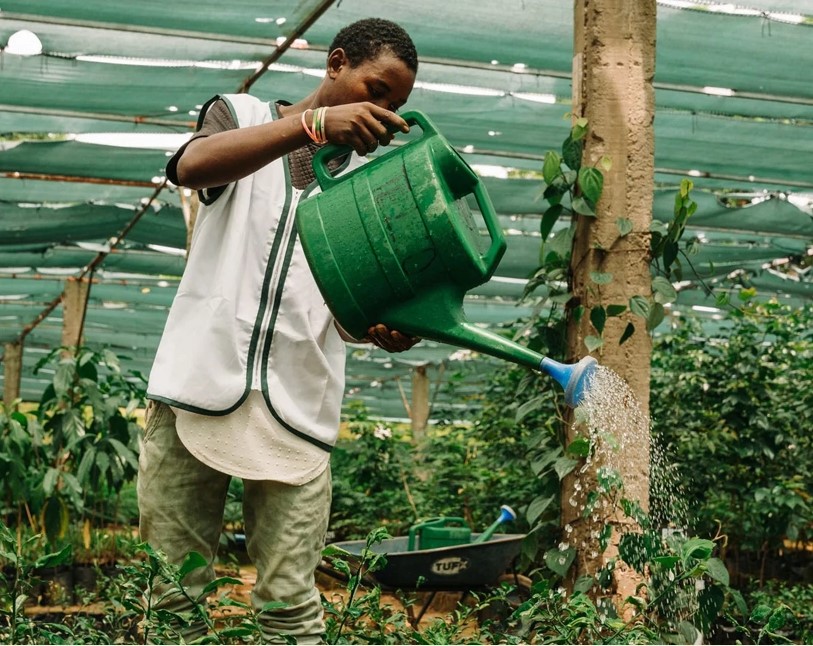
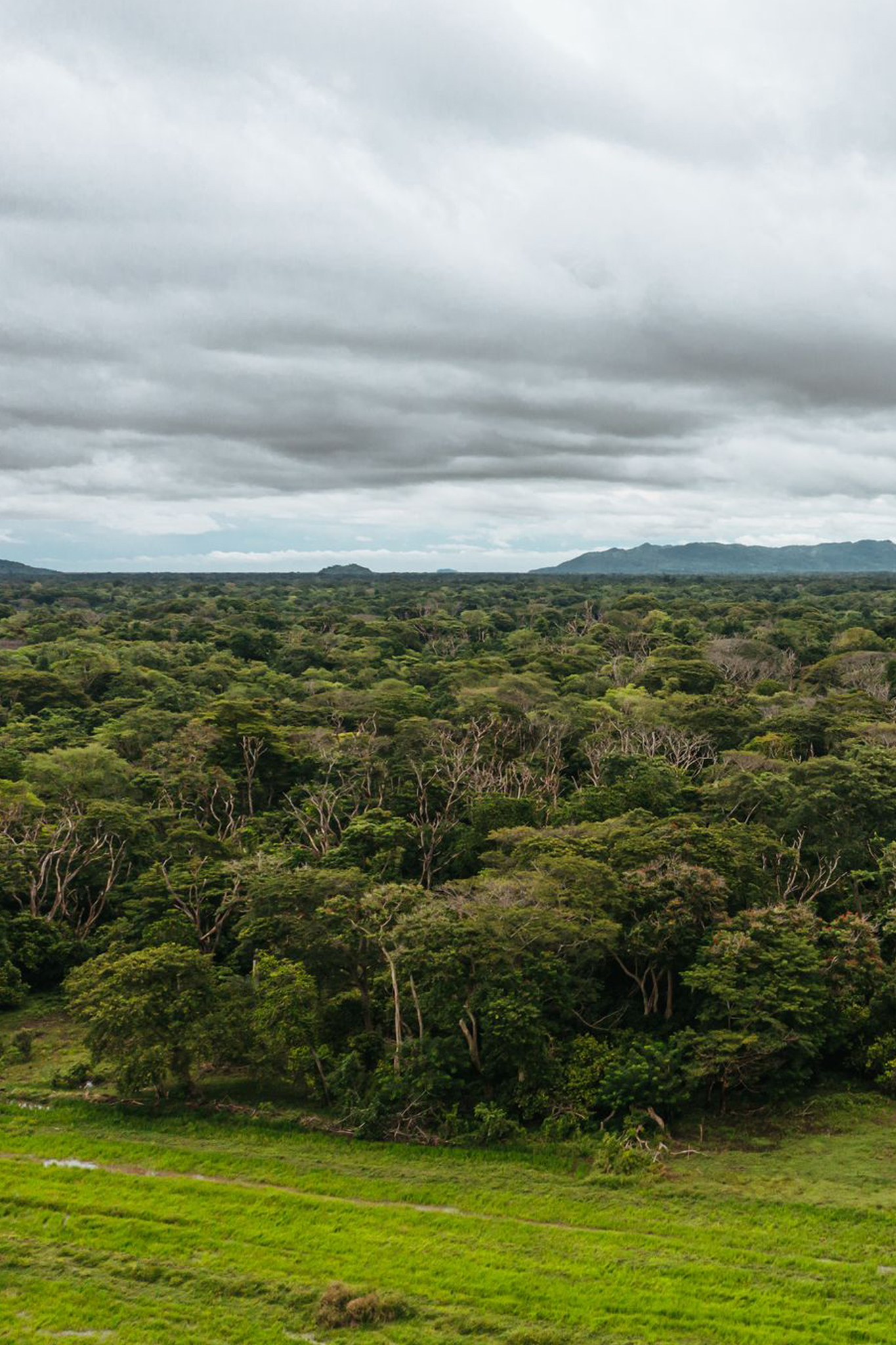
Over the past 60 years, Madagascar has lost nearly 44% of its forest cover. This deforestation is accelerating rapidly, and the country ranks 4th in terms of deforestation, with 510,000 hectares destroyed in a single year (equivalent to 48.5 times the area of Paris), according to Global Forest Watch. The country’s deforestation is partly explained by the need for arable land for farmers who operate using slash-and-burn agriculture, particularly for rice cultivation, the basic food ingredient for Malagasy people (soil fertilization by ash). To avoid this process, which is harmful to the soil and climate, Authentic Products developed an agroforestry program. This consisted of establishing 8 nurseries of firewood and construction timber and cash crop seedlings through the Savanille (3 nurseries) and Authentic Vanille (5 nurseries) projects.
LEVER 5
INITIATE A CARBON OFFSET PROGRAM FOR VANILLA
Reducing climate impact involves developing agroforestry, as previously discussed, but also restoring Madagascar’s forest cover. In 2020, 5 hectares were planted through the Authentic Vanille project. The project aims to plant 10 hectares in 2021 and an additional 3 hectares across the three municipalities of the Savanille project. Authentic Products, in collaboration with its partner nursery Forest Madagascar, intends to implement a comprehensive reforestation campaign. This company provides the supply of seedlings and offers around fifty varieties of forest seedlings for reforestation in the SAVA region. To ensure the success of the reforestation campaign, 100,000 seedlings have been stored awaiting planting.

LEVER 6
CONSERVATION OF
NATURAL HABITATS
FAUNISTS AND
FLORISTICS
MALAGASY
In many countries, women are the pillars of the family, active members of the community, and also responsible for agricultural work. Thus, their education and training contribute to their empowerment towards their environment and their community. A module to train women in budget management was created in March 2019. This module is dedicated to the Tsara Kalitao project, initially entrusted to the NGO GCD (Groupe de Conseil et de Développement) for one year, until April 2020. This module is now entrusted to trained facilitators. In a country where people live from day to day, the objective of this training is to learn how to manage a family budget in the form of simple accounting.
Mastering budget management allows women to analyze their expenses and income and to plan for the medium term. Thus, it is possible for them to achieve financial security during the lean season (February to March) and to invest in a personal project.